The right meal prep containers aren’t just nice to have… they’re kinda the whole point. You can spend your Sunday chopping veggies, roasting chicken and organizing your fridge like you’re in a Pinterest ad, but if your containers suck? It won’t stick.
Lids that leak, plastic that stains, weird smells, stuff that doesn’t stack… it all adds up. You’ll start skipping prep days, tossing leftovers, and wasting time figuring out what’s still good to eat.
Good containers fix all of that. They make food last longer, help with portion control and just make everything feel way more doable. You’re not fighting your kitchen… you’re working with it.
If you want to actually enjoy meal prep (and stick with it), you gotta start here. The container is the tool… the food is just the fun part.
Best Materials for meal prep containers: Glass, Plastic or Stainless Steel?
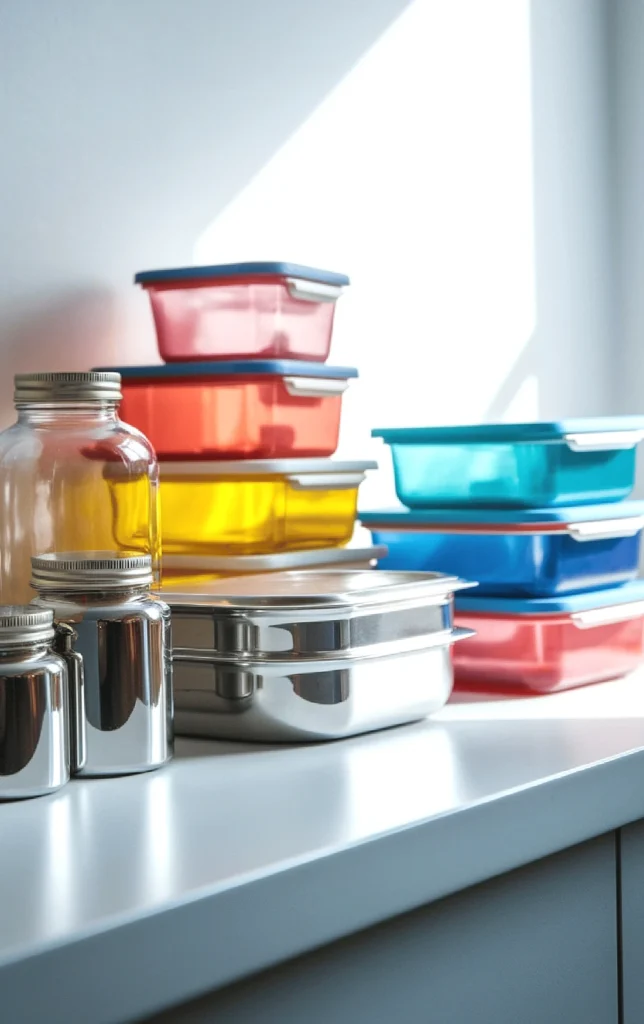
Not all containers are created equal… and choosing the wrong kind is how you end up with tomato-stained lids or mystery smells that won’t quit.
So before you stock up, here’s what actually matters for real-life, eat-on-the-go people like us:
1. Glass Containers
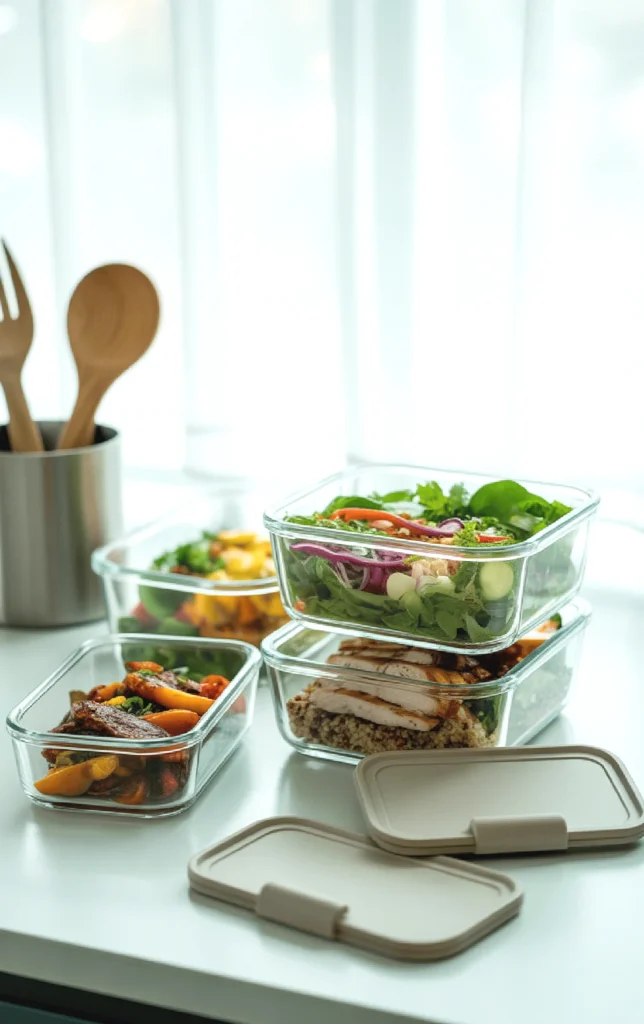
Glass is the one people sleep on until they try it. It doesn’t stain, doesn’t hold onto weird smells and you can toss it in the oven or microwave without a second thought. It’s solid, reliable and looks way more expensive than it is.
You’ll find most come with snap-on lids that seal super well, so no soup leaks in your work bag. They’re also see-through, which helps you keep track of what’s in the fridge without opening every single lid.
You can even write on the glass with a dry-erase marker if you’re feeling extra organized.
Only real downside? They’re heavy and breakable. Not great if you’re meal prepping for kids or packing lunches to go every day. But for home use, leftovers or freezer meals, glass is a win.
2. Plastic Containers
Plastic is everywhere for a reason… it’s lightweight, cheap and easy to grab in bulk. If you’re just starting out or prepping a bunch of small snacks, it’s a solid pick. Just be picky about the kind you get.
Look for BPA-free, microwave-safe and dishwasher-safe labels. A lot of cheaper plastics will warp in the dishwasher or stain after one pasta night, so don’t expect them to last forever.
They’re super handy for cold stuff like fruit, cut veggies or sandwiches but less ideal for hot foods or oily sauces. Some get weird smells after a few uses and you’ll probably need to replace them more often.
Still… plastic’s the easiest way to start meal prepping without spending a ton.
3. Stainless Steel Containers
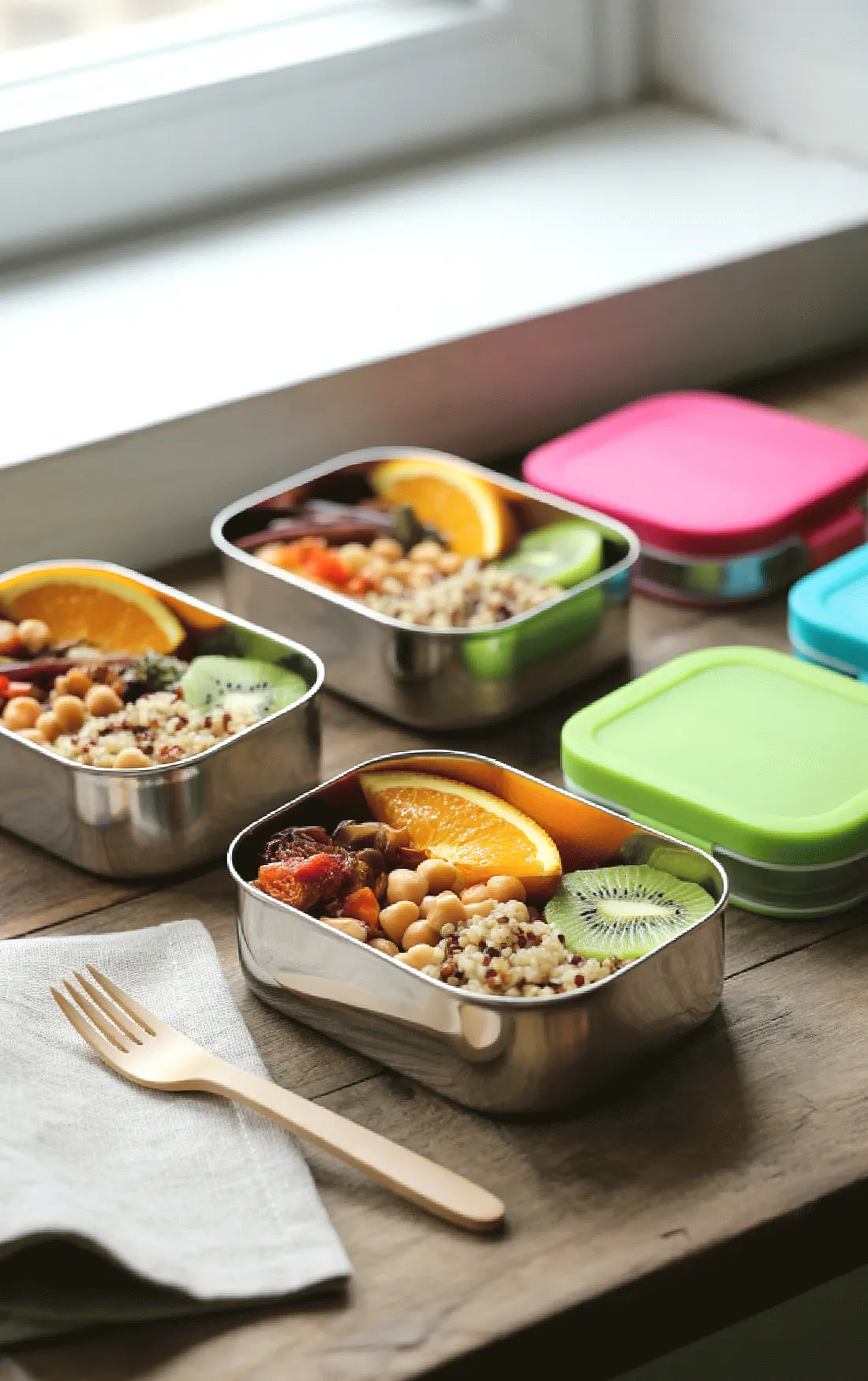
Stainless steel containers are basically the long-term relationship version of plastic. They’re durable, non-toxic and don’t leach anything weird into your food.
A lot of them come with tight-fitting silicone lids that help keep things fresh without leaks.
They’re also lightweight, which surprises people, and they won’t break like glass. If you’re looking to go more eco-friendly and low-maintenance, these are a strong option.
Downside? You can’t microwave them. Also, not being able to see inside means you might forget what you packed… unless you’re into mystery lunches.
But for salads, smoothies, grain bowls or meal prep on the go, stainless steel holds up great and looks good doing it.
Bottom line? Pick what fits your routine, not what looks cute in someone else’s cart.
Size Does Matter: Portion Control 101
So here’s the thing… if your containers are too big, you’ll fill ‘em. Not because you’re extra hungry but just because the space is there. I’ve done it too.
Oversized meal prep containers make overeating way too easy and that kinda defeats the whole meal prep point.
Smaller containers help you stick to a realistic portion without feeling like you’re on a sad diet. You don’t need to eat like a bird… just not like you’re feeding a family of four in one sitting.
I like using a mix of sizes depending on what I’m packing, mail meals or snacks, and depends if it is a single meal or for more people. It feels more balanced and helps me not just throw everything into one container like a stew I didn’t ask for.
Another perk? You can mix and match meals easier. Grab a quinoa base, top it with a different veggie and sauce each day, and boom, three different lunches, one prep.
Also… pro tip? Measure out a few meals one week just to eyeball what real portions actually look like. You don’t need to weigh food forever, but doing it once makes it easier to wing it later.
Features That Actually Make Your Life Easier
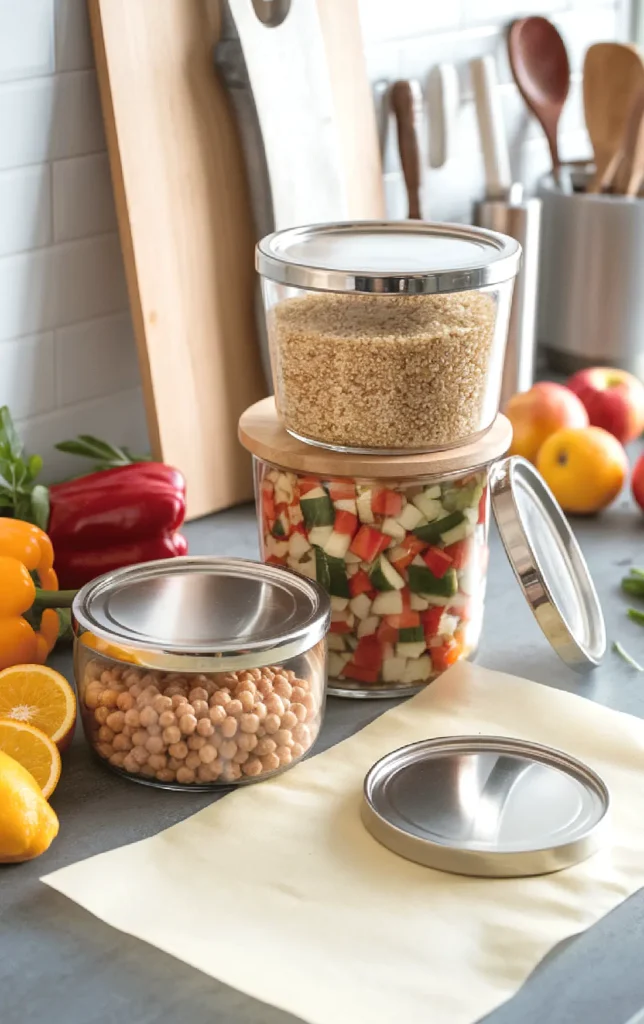
It’s not just about what your containers are made of… it’s what they can do that matters.
If they’re a pain to clean or leak all over your bag, you’re not gonna use them. Simple as that. Here’s what to look for when buying your meal prep containers:
- Microwave and dishwasher safe is non-negotiable for me. If I can’t heat it up or toss it in the wash after, it’s just more work I don’t want. Always check the bottom for the little icons so you’re not guessing.
- Airtight lids are another big one. If the lid barely clicks or pops off in your bag, it’s not worth it. Snap locks or screw tops usually seal the best and keep things fresh longer. No one wants soggy salad or dried-out rice.
- Stackable designs are a fridge game-changer. If your containers can’t nest or stack, you’ll be playing Tetris every time you open the door. Flat lids help too, so you can pile things without the Leaning Tower of Leftovers situation.
- Clear containers make life easier too. You don’t wanna dig through ten lids just to find out you packed the same chicken again. Being able to see what’s inside saves time and helps you actually eat what you prepped.
Extra credit? Containers with sections or dividers. Great if you like keeping textures separate or packing lunch bento-style. Not necessary, but fun if you’re into that kinda thing.
Sustainable Swaps That Don’t Feel Like a Chore
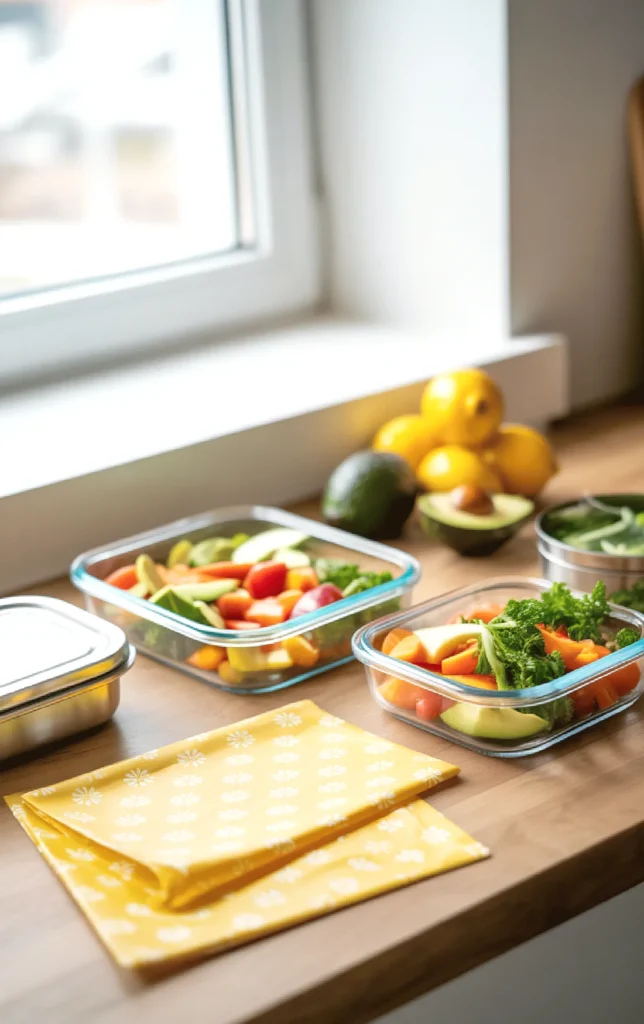
Going eco-friendly with your meal prep doesn’t have to be all or nothing. You don’t need to toss everything plastic and start over. Just start swapping little by little with stuff that actually works.
Glass and stainless steel are the easiest upgrades. They last forever, don’t leach weird stuff into your food and you can toss them in the dishwasher without stressing. If one breaks (rare, but it happens) it’s not adding to a pile of single-use trash.
Another simple switch? Beeswax wraps instead of plastic wrap. They’re reusable, clingy enough to stay put and great for covering bowls or wrapping snacks. Just don’t use them on raw meat… trust me on that.
Also, if you’re buying plastic, choose the good kind once instead of buying cheap containers that crack after a month. Long-lasting plastic is still better than using five disposable containers a week.
Bottom line… don’t overthink it. Being a little more mindful with your containers adds up, and it doesn’t have to feel like a full-on lifestyle overhaul. Just smarter choices that make sense.
How to Organize Your Container Chaos
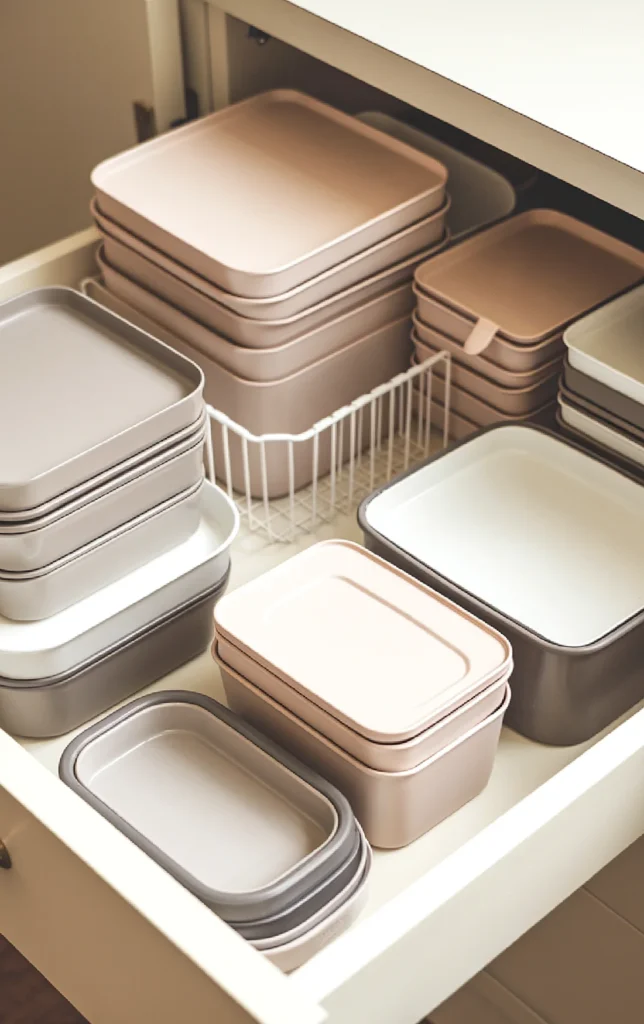
Meal prep sounds great until you open that one cabinet and a mountain of lids comes crashing down. I’ve been there… and honestly, most of the mess is just bad systems, not too much stuff.
Start by matching every lid to a base. If something’s missing its partner, it’s gotta go. I know it’s hard but you’re not gonna find the lid in six months. Let it go.
Group containers by size so you’re not playing guessing games every time you prep. I stack mine by shape (round with round, square with square) so I can grab what I need fast. If you have the space; match the lid to the container straight away, otherwise lids go in a bin or drawer divider to keep them from spreading like clutter weeds.
Labeling helps more than you’d think. Even if it’s just masking tape with the date or what’s inside. It keeps your fridge from turning into a mystery zone where food goes to be forgotten. Especially helpful if you prep similar meals that all start to look the same by Thursday.
And if your cabinet still feels like chaos, try keeping your go-to containers in one spot. The ones you actually use weekly. Everything else can live in storage or get donated. If it’s not making your life easier, it’s just in the way.
Your Container Glow-Up Starts Here
Getting into meal prep isn’t just about the food… it’s about making your life easier. And the right containers do most of the heavy lifting. If they stack right, seal tight and survive the dishwasher, you’re already winning.
My best tips are to start small, replace what’s broken or annoying and build from there. Meal prep only sticks when it feels doable… not like a full-time job.
So here’s your reminder: you’re not “bad” at meal prep. You just might be using the wrong tools. Fix that part and the rest gets way easier.